Where they overlap
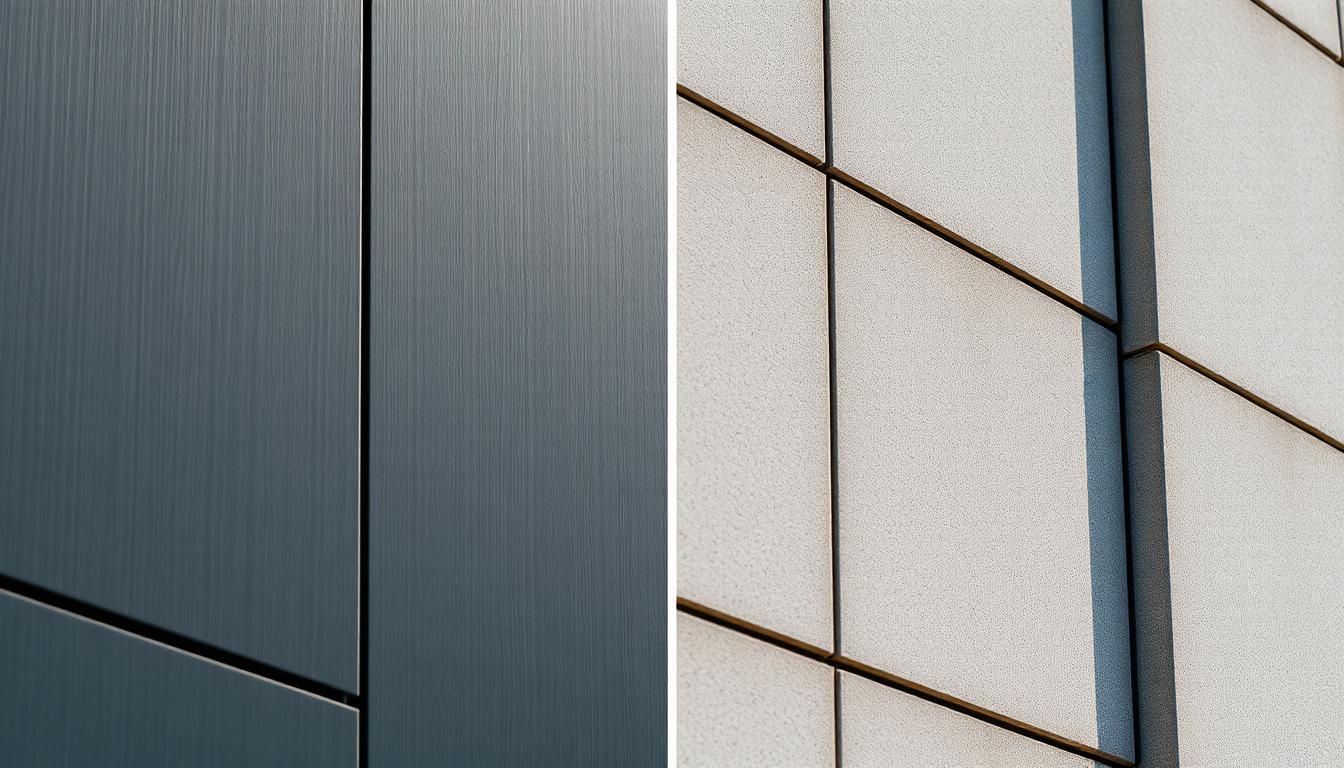
Both materials are dimensionally stable enough for large-format panels. Both take clean reveals and concealed fastening. Both deliver the flat, architect-friendly aesthetic that's become the default on modern mid-rise. Visually, a well-installed ACM façade and a well-installed fiber cement façade can look almost identical from thirty feet away.
So the decision almost never comes down to how they look. It comes down to four other things: fire rating, weight, panel size flexibility, and cost over the building's life.
Where ACM wins
- Panel size and fabrication flexibility. ACM can be fabricated into larger-format panels than fiber cement typically supports, and it handles folded profiles like rout-and-return cassettes. If your elevation calls for 10-foot panels with tight shadow-line joints, ACM is usually the path.
- Weight. ACM is significantly lighter per square foot, which translates to less demand on the sub-framing and easier handling during install. On retrofits over existing structure, that weight delta can decide the material.
- Finish range. Metallic, pearlescent, custom colour match — ACM's PVDF coating range is broader, and the finish is factory-applied under controlled conditions.
- Custom profiles. Curves, angles, folded returns, custom perforations — ACM is designed to be shop-fabricated into non-standard shapes. Fiber cement is a flat panel by nature.
Where fiber cement wins
- Fire performance out of the box. A2-rated fiber cement is non-combustible, full stop. Fire-rated ACM exists (PE core replaced with mineral fill, usually labelled FR or A2) but carries a meaningful price premium. On code-sensitive projects, fiber cement often wins on compliance alone.
- Material cost. Pound for pound, fiber cement is cheaper than equivalent ACM — sometimes substantially. On budget-driven projects (schools, affordable housing, mid-range commercial), that line item is hard to ignore.
- Field paintability. A primed fiber cement panel can be painted on site, which gives you colour-matching flexibility ACM can't match without full re-manufacture.
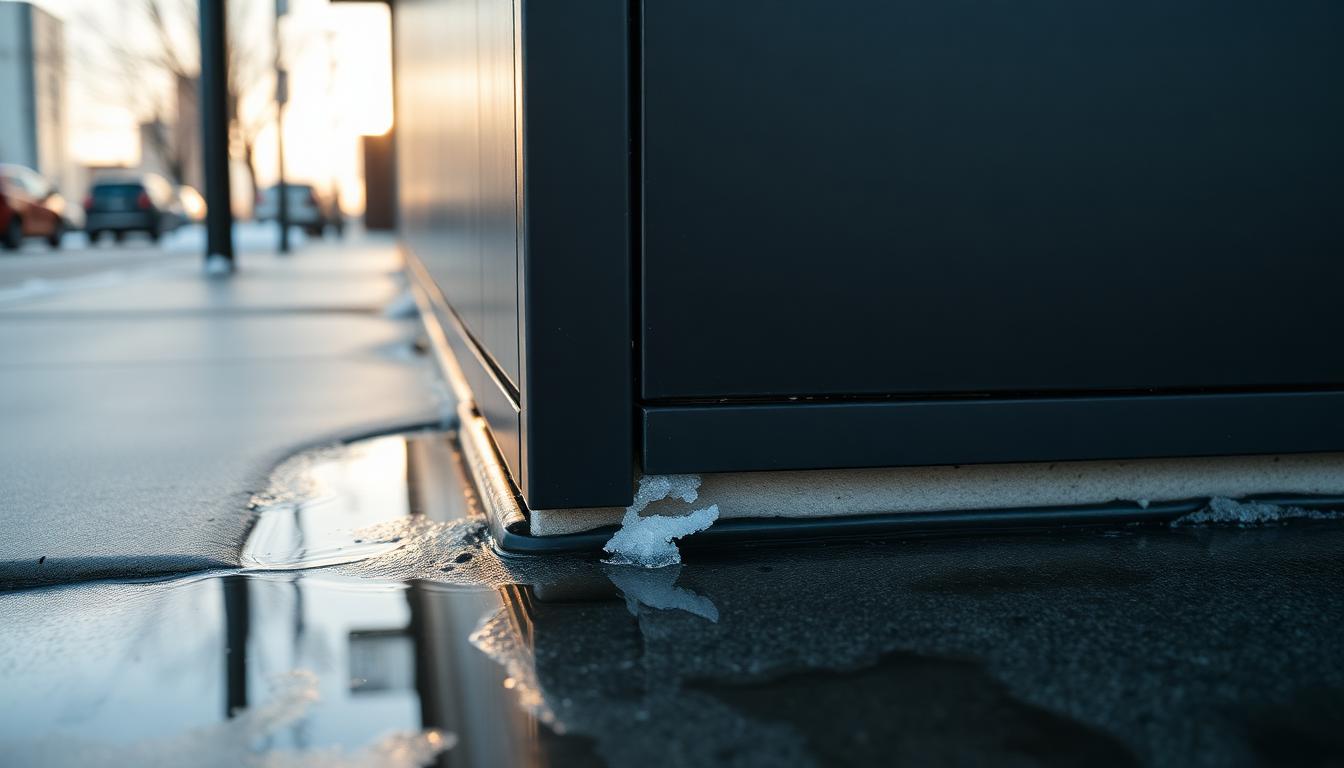
- Freeze-thaw stability. Fiber cement is extremely stable across the GTA's winter cycle — not an advantage that shows up on a spec sheet, but one that shows up on a twenty-year-old building.
GTA-specific considerations
Both materials perform well through Toronto winters, but there are some local nuances worth knowing:
- Salt exposure near the lakeshore and along major arterials slightly favours ACM — the PVDF coating is more forgiving of chloride than a painted fiber cement surface.
- Code compliance for mid-rise Part 3 buildings in the GTA increasingly expects non-combustible cladding assemblies. FR-core ACM or A2-rated fiber cement both satisfy this; polyethylene-core ACM may not, depending on height and occupancy.
- Delivery timelines on large-format fiber cement panels from major suppliers have been running 6–10 weeks. ACM lead times vary by fabricator but are often shorter when the shop is local.
A quick decision framework
When a GC or architect asks us on the phone, we usually ask three questions first:
- What's the building's fire classification? (This often narrows the choice to one material.)
- What's the target panel size and joint detailing?
- What's the budget envelope for the cladding line?
A rough heuristic, knowing every project has its own reasons to deviate:
- Fire rating tight, budget tight — fiber cement.
- Ambitious detailing, budget supports it — ACM with an FR core.
- Retrofit with weight concerns — ACM.
- Needs metallic or custom colour — ACM.
- Needs on-site colour flexibility — fiber cement with field finishing.
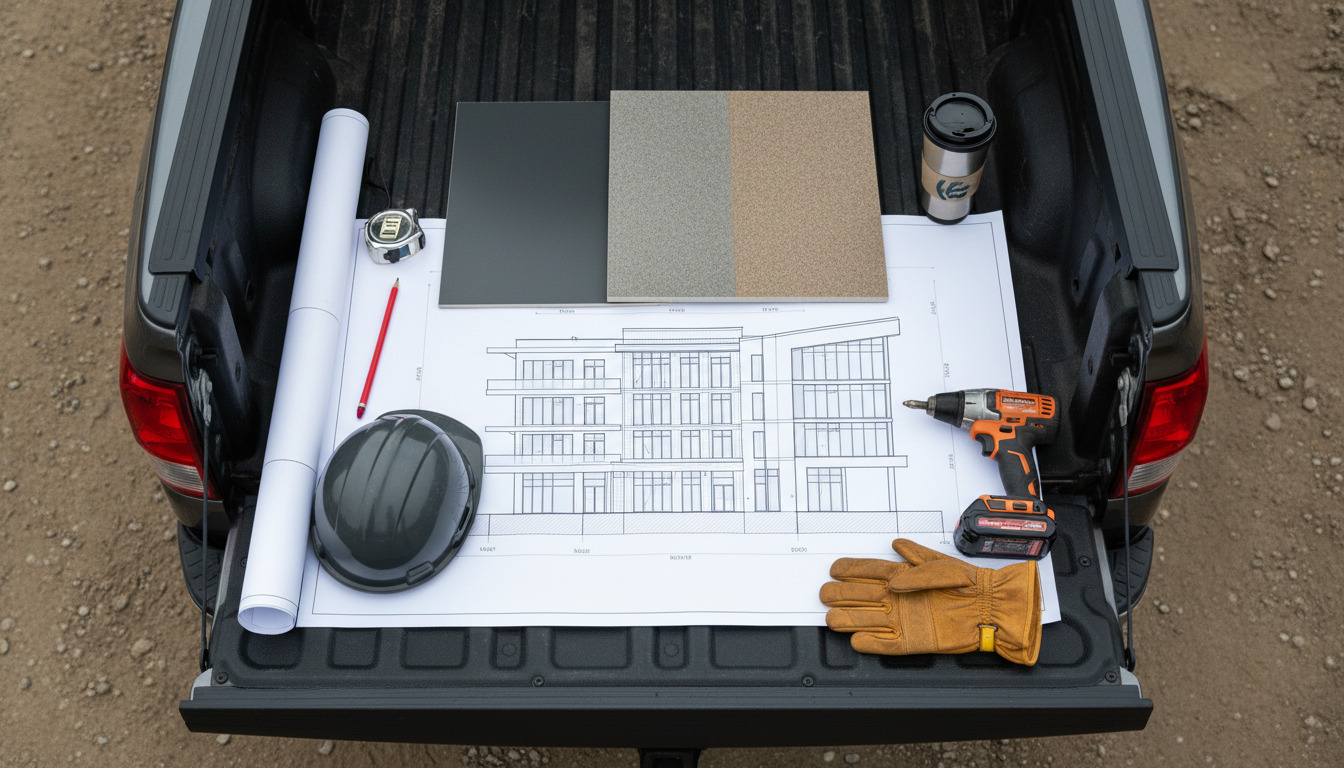
Most projects don't need both. The ones that do often use ACM on the feature elevation and fiber cement on back-of-house or less-visible faces — a split we handle routinely on mid-rise residential. What matters is that the choice is made deliberately in the early drawing stage, not in a change order six months into construction.
The short version
Pick for fire class first, budget second, detail complexity third, and finish range last. If you're still undecided after those four filters, get a real panel sample of each in your hand — side by side, in the actual light your building sits in. Paper comparisons and spec sheets only take you so far.